Female Fundraising Charity Auctioneers
  • HOME
  • Services
  • Videos
  • ABOUT
    • Press
  • Testimonials
  • RESOURCES
  • Contact

What Doesn’t Sell at Nonprofit Charity Auctions

8/30/2019

0 Comments

 
Picture
When planning your charity auction, you want to source items and experiences that people will actually want to bid on. This relies a good deal on who your target audience is, different groups bid on different things, after all. But there are some items that tend not to sell well, regardless of your audience.

Art is too subjective to do well at your typical charity auction. You run the risk of no one in attendance loving the piece enough to bid on it. At charity events, artwork rarely sparks a bidding war. Most of the time artwork will sell to the one person who wants it, if it sells at all. Even if you have the right professionals to evaluate the artwork, it’s probably not worth including art in your auction.

An exception to this is if your nonprofit works with the art community. In that case, your audience would naturally include those more interested in acquiring pieces of art.


Clothing and jewelry are similarly subjective, though often far less expensive than a piece of art. Physical items of clothing are a particularly difficult sell because they rely on someone being the proper size and finding the item appealing.

​Again, there are exceptions to this. The famous
Wine Women & Shoes events make incredible amounts of money each year on the premise of clothes and shoes. But, this is a highly specialized event and what works here is not going to translate well to a typical nonprofit auction.


Instead aim for these items:

  1. Trips. Trips are a no-brainer at charity auctions. Aim for trips that are all-inclusive, or bundle hotel rooms with airfare and an experience at the trip destination. And always look for trips that attendees would likely not be able to access on their own. We’re talking once-in-a-lifetime, exclusive experiences. One of my favorite sources for trips is HGAFundraising.com. They offer amazing packages at literally unbeatable prices, guaranteeing your nonprofit a huge return on your investment. 
  2. Food and Wine. Food and wine are the juggernauts of nonprofit auctions. They always sell. Wine often sells for far more than retail rate. Load up on restaurant experiences and local wines whenever possible.
  3. Experiences. Tickets to events: sports games, the opera, the ballet, etc., are all great options for any charity event. Many times the people attending your events don’t want for things in their everyday lives. Offering experiences rather than items encourages your guests, who may not want to bid on a physical item, to get in on the action. 

Generally speaking, when sourcing items for a charity auction, aim for items that have a broad appeal. You want as many people as possible bidding on each item. Trips and experiences are always your best bet, especially if you can get your hands on some truly one-of-a-kind experiences that your guests aren’t able to get elsewhere. And whatever you do, stay away from clothing items that rely on sizing.
0 Comments

Sexual Harassment at Charity Events

8/26/2019

0 Comments

 
Picture
Sexual harassment at charity events is something we don’t talk about enough in this field. It happens all the time.

It’s a horrible situation especially because, when I’m mic'd up for an event, I can’t chew out the human scum lobbing these inappropriate comments at me.


Unfortunately, older men are the worst exhibitors of this behavior.


They put their arm around you and pull you into a hold like you are their wife or girlfriend. It’s deeply intimate and incredibly inappropriate. And there’s nothing you can do. You are representing the nonprofit in that moment, you can’t pull away or tell them off. You have no recourse.


Men have interrupted my auctions, not to bid on items, but to ask me to sell them my panties.


People have gotten up to interrupt me, mid-auction, and explain to me how they think I should be doing my job.


I spent a good portion of last auction season pregnant. I’m small, so when I’m pregnant I get really big. Each time I have come back to work after having a baby, I receive gross comments about my body and how thin and attractive I am now that I’m not pregnant. It’s gross, it’s rude, and it’s inappropriate. I wish they noticed the auction items as much as my post-pregnancy weight loss. 


I’m already preparing myself for all the comments I’m going to get when I show up to auctions this year looking like my normal, non-pregnant self. Also, thank you for remembering how good I am at my job, instead of just what I look like. I love this job and I’m damn good at it, it would be nice if people remembered that for a change.


I’m not sure if male auctioneers suffer similar mistreatment at events. I would not be surprised to learn that they do.


I have thought about asking the nonprofits I work with to do something to combat sexual harassment at events. If it’s happening to me, it’s definitely happening to other people. But, I’m not sure what they could, or would, do about it. Will they risk losing a major donor who just happens to also be a creep? Or will they let that behavior slide because they can’t function without those major donations? Unfortunately, I think I know the answer. 


Comment below and let me know what you think nonprofits can/should do if a donor behaves inappropriately at a fundraising event.

0 Comments

The Worst Donor Thank You Ever

8/23/2019

0 Comments

 
Picture
Recently, I received an email from an organization that I give to regularly. Ostensibly this was a thank you email, but you wouldn’t know it. I considered including the email in this post, but I don’t want to embarrass the party that sent it.

The email in question was over 300 words long, and “thank you” appeared only once, near the very end of the email. The person who created this email was clearly not interested in thanking me for my donation. In fact, they spent the beginning of the email talking about how giving to the organization makes them feel.


They were also not interested in personalizing the correspondence because everything about this email screamed form email.


Now, I’m not against using form emails. In fact, used properly form emails can save your organization a lot of time. But, you must put in the time to personalize every single email you send, especially thank you emails. This can be accomplished through a simple mail-merge process.


When personalizing thank you emails at least three things must be included:


  1. The donor should be addressed by name. 
  2. You should make reference to each donor's specific philanthropic interests. 
  3. You should mention at least a couple ways your donors dollars are being used. 

In the case of this email, the sender listed off three ways in which my dollars might have been used, none of which were the reason I give to this particular organization.

Finally, there’s an obvious typo near the end of the email. It should go without saying, but all materials produced by any organization should be proofread before being sent out. 


When it comes to thanking your donors, the details matter. Your email should be uniformly formatted and free of typos. It should address your donor personally and include references to their specific philanthropic interests. And most importantly, it should say thank you early and often.

0 Comments

Minor Donors: Your Unsung Heroes

8/19/2019

0 Comments

 
Picture
80% of your donations come from 20% of your donors.

Everyone in the nonprofit world knows this rule.


But not everyone remembers the other side of this rule: 20% of your donations come from 80% of your donors. 


It’s easy, even tempting, to overlook these 80% because they don’t donate as much as major donors. After all, there are only so many hours in the day, your time is better spent tending to your major donors, right?


Wrong.

Does this group’s lower capacity to give make them less worthy of your time and attention?


Of course not! 


I challenge all nonprofits to stop ignoring their minor donors. 


Too often, minor donors feel marginalized and rejected by the nonprofits they support because they do not receive even a fraction of the recognition that major donors receive. 


To create long-lasting donor relationships and increase donations, nonprofits must put more effort into recognizing their minor donors.


A great place to start is by creating giving societies for your long-term, minor donors. Start with donors who have been contributing $500 a year for twenty years or more.


**If your organization is small and $500 is considered a large gift, adjust that number down to fit your organization. Giving societies work for any donation level.


Recognize these donors at all of your special events, just like you would with your major donors and honorees. Include their names in your annual report. Thank them at every opportunity.  


Giving your minor donors love in simple and easy ways costs your organization almost nothing and it means the world to your donors. After all, $500 a year over twenty years is not an insignificant amount of money for most people.


There are dozens of unique and creative ways to help this group feel vital and appreciated by your nonprofit so that they will continue giving for years to come. 


Here are a few other ideas to try:

  • Host a special event just for giving society members 
  • Send personalized thank you letters 
  • Hand out special name tags at major events to distinguish them from the crowd
  • Interview them about why they care about your nonprofit and publish these interviews in your newsletter and on your website
  • Record these interviews and release them over social media 
  • Use giving society members as speakers at your events

Encourage giving society members to recruit their friends to volunteer and donate to your organization. Harness their enthusiasm to increase your reach and build your donor rolls.

Minor donors who give year after year are vital to the longevity of many nonprofits. Don’t ignore the donations and volunteer hours contributed by this group. Creating a giving society for your nonprofit’s minor donors is a great first step towards maintaining a healthy relationship with your minor donors and encouraging others to start giving each year as well.


How does your nonprofit show appreciation for your minor donors? Let me know in the comments.

0 Comments

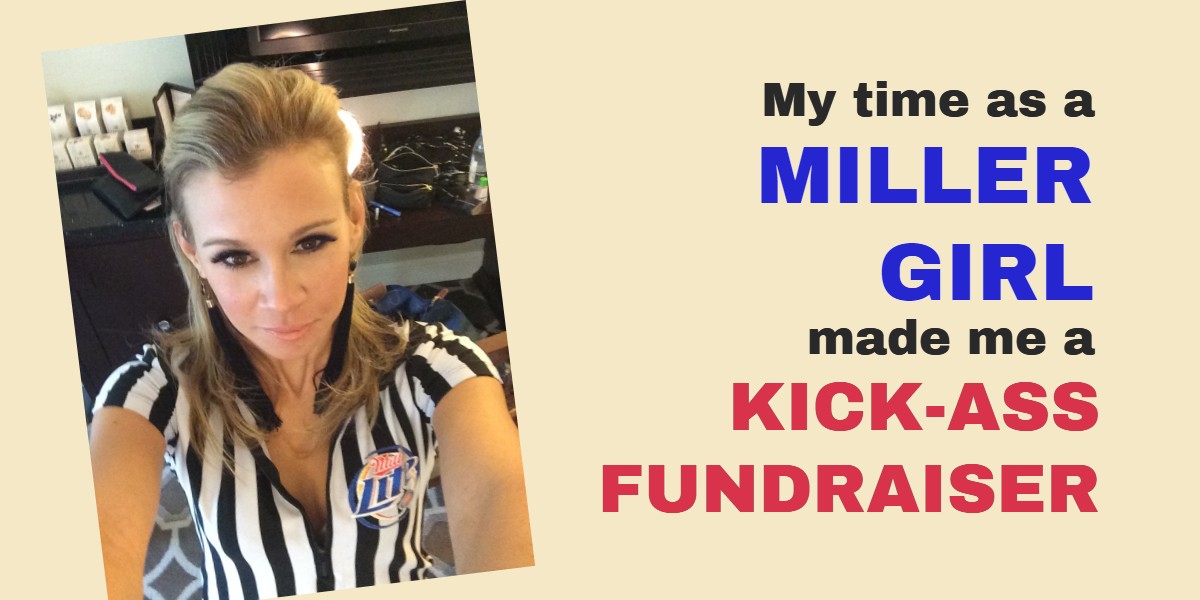
My Time as a Miller Girl Made Me a Kick-Ass Fundraiser

8/16/2019

0 Comments

 
Picture
When I moved back to Minnesota in 2006, after three years of working on board a Carnival cruise lines ship, I was young and inexperienced. I had a difficult time finding a job because I couldn’t figure out how to spin my experience into something appropriate for a resume. When I did manage to land an interview most people wanted me to get them a deal on their next cruise. I was constantly asked about all the crazy things people imagined we got up to on board the ship.

A few months into my job hunt, I saw an ad in the paper for a promotional company. I sent in my headshot and resume, and within two hours I got a response. The email invited me to a group interview at my local Buffalo Wild Wings restaurant. It sounded odd, but I had nothing else to do, so I went.


It turns out I was interviewing to be a Miller Girl. I had graduated from Northwestern University four years earlier and I never pictured myself promoting beer as a job. But, it paid $30 an hour and I was broke. Little did I know, my time as a Miller Girl would help me build skills that I use everyday as a fundraising auctioneer.


I learned how to approach people without it being awkward and uncomfortable. Sure, I had a lot of experience doing this on the cruise ship, but this scenario was totally different. In a bar I couldn't be sure what mood people were going to be in when I approached them, and I had the very tricky goal of convincing people to stop drinking the beer of their choice and switch to Miller Lite in order to improve company sales. 


Approaching people you don't know is awkward enough. Approaching people you don't know in an dark bar is super awkward. Approaching people you don't know in a dark bar while wearing skimpy clothes requires a fearless attitude. 


Through trial and error I perfected my method of walking up to complete strangers and initiating conversation. What worked best for me, and what still works today, is opening up the conversation in a natural honest way. When I'm meeting a donor I don't know I simply walk in, introduce myself, and ask them how their day is going. I share a story about myself, something which is true and fairly mundane. This puts people at ease and gets them to talk about themselves. Once the first four minutes of conversation are out of the way, the rest flows naturally.


I learned how to be a good listener. Chatting with tipsy/drunk people usually leads to lots of listening. Most people just want to be heard. When they find a good listener who asks open-ended questions, their stories just come pouring out. 


As a Miller Girl, I heard a lot about people's relationships, their jobs, their cars, their problems, and the Vikings. As a fundraiser, I hear about people's passions, visions, and dreams of making the world a better place. I ask questions about why they give to particular nonprofits, how they got involved with philanthropy, and why they're interested in making a difference in their community. Listening has resulted in more relationship-building conversations with donors than it ever did Miller Lite sales.


I got comfortable doing whatever it took to get the job done. Miller had tons of promotions going on each month. Sometimes these promotions were games or giveaways. Oftentimes, they required asking people to do things they might not be comfortable doing: taking a survey, playing a trivia game, singing a song, or doing a dance. I had no idea how useful this skill would be to me. 


When I started working at my first nonprofit, I quickly put this skill to work. When I needed to call someone, I did. When I needed to have a conversation with a donor or board member, I did. When I was asked to run icebreaker games and board meetings, I did. I never said no. These days it takes a lot to make me uncomfortable.


I learned how to motivate others. Convincing brawny Minnesotan men to switch from drinking their beer of choice to Miller Lite is no easy task. It requires lots of excitement, energy, and enthusiasm, characteristics that are important whether the aim is getting people to try a new drink, attend a fundraising event, join a board, or make their first donation. The ability to motivate others is of paramount importance in the world of fundraising. It's the skill that I am hired for most often, my energy and ability to motivate groups to give is second to none.


I learned how to keep an open mind. I usually worked at big, chain restaurants like Buffalo Wild Wings, Champs, Dave & Buster's, etc. Only rarely would we work at small, local bars. I remember one particularly cold night when our last stop was a small bar called The Nook, in Saint Paul, Minnesota. I was tired, I was cold, and my feet hurt. The last thing I wanted to do was go to some dive bar. We pulled up and the bar was literally the size of the kitchen at my parents house. I dreaded walking through the door. 


It was one of the most enjoyable evenings of my short-lived Miller Girl career. The people were friendly and fun. Instead of treating us like pieces of meat, they invited us to sit down, share their baskets of fries, and watch the hockey game. As a fundraiser, keeping an open mind about donors, corporations, and your coworkers is super important. 


Never in a million years would I have thought that my time as a Miller Girl would translate so well to my career as a charity fundraiser. It just goes to show that every job is an opportunity to hone your skills. Even something as seemingly unrelated as product promotion can give you ample experience working with the public and dealing with awkward situations, two things that are necessary for all professional fundraisers.

0 Comments

Keep Your Planning Committee Focused on What Matters: Fundraising

8/12/2019

0 Comments

 
Picture
Most of my clients have committees tasked with leading, or assisting with, the event planning process. This is the case despite the fact that, if you ask, most nonprofit professionals will tell you that overseeing a committee is one of the hardest parts of their job.

Imagine, if you will, a circus with twenty different and unique monkeys who are all very talented but who are also all very determined to focus on the wrong thing. Instead of performing in the big tent they are eating popcorn, climbing an audience member’s head, and spraying paint on the walls. 


Why are they doing these things? 


Because eating popcorn is a lot more fun than performing.


When left to their own devices event planning committees tend to focus on the easy stuff first, leaving the hard stuff for last. This makes sense, they just want to do the fun stuff. They want to go to food tastings, decide on color schemes, and pick out tablecloths. 


Everyone likes to plan parties, no one likes to fundraise. 


Don’t get me wrong, tablecloths, color schemes, and menus are decisions that need to be made if your event is going to be a success. But these are not decisions that need to be made by committee. You don’t need thirty people to pick out tablecloths.


So, what should your event planning committee be doing?


Planning committees should be deeply involved in making the guest list and recruiting people to attend the event who have both the capacity to care and the capacity to give. 


Committee members should be following up on recruitment efforts. If voicemails have been left, they should be following up with emails. If emails have been sent, they should be following up with a phone call. 


They should be soliciting items and experiences for any live or silent auctions taking place at the event. 


Committee members should be soliciting potential sponsors. 


They should be passing on any helpful, pertinent rumors about members of the community and their capacity to give/interest in your organization. Committee members are your eyes and ears in the community.


Set the expectation that your committee members will help your development department (or development person!) do the actual work of reaching out to and engaging with potential donors prior to the event. People need to know what they are getting themselves into from the beginning. Your committee’s job is to help the development team make sure that not only are there a plentiful number of butts in seats on the day, but that the right butts are in those seats. That means people with both the capacity to give and the capacity to care. 

​
For more on committees, take a look at this post about keeping committee members engaged at fundraising events.
0 Comments

Increase Your Silent Auction Revenue with Mobile Bidding

8/9/2019

0 Comments

 
Picture
I have had a lot of success with mobile bidding technology and silent auctions recently. 

If you are unfamiliar with mobile bidding technology, it’s software that allows people at your silent auction to bid on items using their phone or a tablet.


Here’s how it works.


Set up your silent auction the way you normally would. Display your items on tables, arranged in whatever way works best for your nonprofit and event attendees. 


Each item should be displayed with an item number and description, but don’t put out those paper bid sheets! 


Instead, your guests will peruse the auction in person and then sign-in to the auction online using their phone or tablet. All the bidding takes place electronically. 


Attendees can even set max bids for the items they bid on and the program will continue to bid for them until the max bid is reached. At which point, your guest receives a text message telling them that the max bid has been reached and offering them the choice to increase it if desired. They can also choose to receive text message alerts when they are outbid on an item.


What I really love about this technology is that it allows you to keep the silent auction open longer than you typically would. 


At most events, the silent auction closes before dinner. This is necessary because it takes the staff and volunteers a lot of time to process all the bids and paperwork involved in a silent auction. 


With mobile bidding technology you can comfortably leave your auction open until the rest of your live auction activities have concluded. And there’s less work for your staff. No more checking and validating bids by hand.


A Caveat
You should know that your nonprofit will likely not see an increase in silent auction revenue the first two years you use mobile bidding technology. All technology has a learning curve and it’s going to take your employees, volunteers, and guests some time to get familiar with it. However, in the third, fourth, and fifth years after you implement this technology your silent auction revenue should really start to take off. 

Even if it doesn’t, I recommend that nonprofits everywhere get on board with mobile bidding technology. Donors are getting younger and younger. Before you know it millennials will be your primary donors, and millennials love technology. 


Mobile bidding technology is a game changer, allowing nonprofits to keep their silent auctions open later and remove some of the stress on already taxed nonprofit staff. It may seem intimidating at first, but give it a try. You won’t regret it.

0 Comments

Bombing On Stage: It Was My Ego’s Fault

8/5/2019

0 Comments

 
Picture
When I bomb on stage, typically the audience can’t tell. It’s only my ego that is bruised.

I work with my fair share of celebrities. I try to be humble and not brag about them or post photos about them on social media. It’s a perk of my job - which I love. I do not take jobs simply because of the celebrities involved. I take auctions because I believe in the organization and their work. 

Except one time. I let my personal desire to interact with a group of high-net worth people and gain exposure get in the way. I made the poor decision to take a job I knew was a mistake. I let my ego take control. 

I’ll tell you what happened. 

The Client
Last year I was approached by a very popular, fancy magazine focused on high-end products for wealthy people. This magazine features 20-million-dollar yachts the way Target features t-shirts. Its pages are filled with ads for $100,000 dollar watches, cognac, horses and all the other toys that the wealthy spend their millions on. Their target audience is the 1%. The magazine had its heyday in the 80’s and recently rebranded to become more appealing to younger audiences. 

This magazine contacted me about raising money for a third party nonprofit organization, a practice that is more common than many people realize. It’s the upper-class equivalent of Safeway asking you at checkout if you’d like to donate a dollar to help the homeless.

The Promise
I was told that if I helped them meet their fundraising goal of $200,000, I would be given a feature in their magazine in addition to my fee. 

This had the potential to be HUGE for my business. The exposure alone was worth its weight in gold. Not only that, I was going to have the opportunity to meet several of the biggest names in the culinary world at this fundraiser.

I couldn’t say no.


What followed was an experience so overflowing with red flags and flashing neon warning signs that any sane person would have walked away. But I couldn’t say no to my ego. I’m great at my job and I wanted that exposure.

Red Flags
The first thing that should have sent me running the other direction was the nonprofit itself. I have a hard and fast rule when deciding which nonprofits to work with: If I learn about an organization and I am not moved to make a donation myself, I will not take on the client or the special event. I need to have the capacity to care for the nonprofit’s mission. If I don’t, I can’t speak in an authentic voice to help others understand the importance of the organization as well as tug at their wallets. 

This nonprofit is run by two prominent chefs. It’s mission is to help younger chefs rise through the ranks and achieve Michelin star ratings. I’m not much of a foodie, give me a good burger and fries at the local greasy spoon and I am happy. This organization wasn’t one that I would personally donate to, nor could I see a real benefit to the community.  

Furthermore, this fancy magazine had no connection to the nonprofit they were holding the event for. Rather, they were connected to the nonprofit only for access to the high-end chefs that they could provide. Another warning sign that I completely ignored. Their relationship was purely a business deal where the nonprofit provides the chefs and the magazine pays for them with a six-figure donation. And rather than donate the $200,000 themselves, they held an auction to pass along the cost to fine dining aficionados and wealthy subscribers. 

The Details
Invitations for the event were posted on a ticket site and sold to whomever wanted to buy them for $1,500 a pop. Another red flag! The room that night was filled with people who purchased tickets to enjoy a ten-course tasting menu prepared by some of the best chefs in the country. They weren’t buying tickets to donate to a charity. No one in that room had any emotional connection to the cause of helping young chefs attain Michelin stars. They were buying a high end experience, not coming to a fundraising event for their favorite organization. 

The event had a 100 person, or 50 couple, limit and a goal of raising $200,000. This means each couple needed to donate a minimum of $4,000 on top of the $1,500 paid for each ticket. The guest list was not curated at all. Rather they assumed that if couples could afford a $3000 meal, they could afford to spend $10-20k on a high-end auction package. What they didn’t know is that most major donors, don’t just donate because they have the capacity to give, they give big gifts because they have a multi-year relationship with an organization and know the inner workings of the nonprofit (how it is run, board members, transparency, etc).

The Auction
Another rule, which I bent for this occasion, is that I never begin an auction after 9 p.m. People are just too tired, too drunk, or too ready to go home to bid with any sort of enthusiasm. They scheduled the auction portion of the evening to begin at 10 p.m., after the ten-course tasting menu and the many, many glasses of wine that experience entailed. I’m sure you can see where I’m going with this. I remember very clearly one guest who, by the time I took to the stage, had fallen asleep on top of her table using her Chanel purse as a pillow and her fur wrap as a blanket. 

This was also a rare occasion when I agreed to an auction with more than eight items. This auction had twelve. All twelve were amazing. Some of the best things I have ever had the opportunity to sell. These were private dinners prepared by famous chefs. Chefs you see on TV. Chefs who have year long wait lists for their restaurants. Under normal conditions these babies would more than exceed the evening’s fundraising goal. 

But these were not normal conditions. 

The icing on this particularly under-baked cake was that the magazine refused to let me set my own starting bids. Instead, they set every opening bid at $10,000. $10,000! With an audience who was first introduced to the nonprofit that evening and who possessed an overwhelming urge to pass out on table tops, this was never going to work. 

On this night, at this auction, with this group in attendance they barely made half of their fundraising goal. I was up on stage, doing my thing, grasping for any tendril of enthusiasm that I could get my hands on and all I got was crickets. 

No one was bidding. 

It was mortifying. 

At several points, the chef whose dinner was being auctioned at the time grabbed the microphone out of my hand and lowered the price. Because, oh yes, did I fail to mention that the chefs were on stage with me while I was calling the auction for, what essentially amounted to, a private evening with them? They lowered the price on all items to ensure they sold, while also making me look like the worst auctioneer in the world who didn’t even know how to set starting bids. 

The Aftermath
After the event, the fancy magazine blamed everything on me and said I “didn’t bring enough energy,” despite the fact that I advised them to make different decisions regarding crowd size, auction timing, starting bids, and the like through the entire consulting process. It was decided that I hadn’t tried hard enough to get people excited and convince them to spend $10,000 on another fancy dinner.

They asked me to donate my fee to the nonprofit because I failed to meet the fundraising goal and, of course, I would not be getting that feature. 

When I travel for events, as I did for this one, my fee covers my travel expenses. Without it, I have to pay for my travel out of pocket. But I agreed to make the donation, despite the fact that the evening’s failures could have been avoided if they were open to my advice, because I needed the experience to be over.

Lessons Learned
I wish I had trusted my gut. I wish I didn’t let my ego get in the way. I wish I had said no when I saw all these red flags. And more than anything, I am disappointed in myself for taking an auction that I knew had no chance of being successful.

After this experience my advice to nonprofits is:


  • Make sure all the guests in the room have a connection to your organization 
  • Be wary of third party fundraisers 
  • Don’t start your auction after 9 p.m. 
  • Have a connection with your donors 
  • Trust your auctioneer to set opening bids

Have you ever bombed spectacularly at an auction? What did you learn from the experience?
0 Comments

The Best School Auction Items You’ve Never Heard Of

8/2/2019

0 Comments

 
Picture
Looking for awesome, fun auction items for your next school auction? These auction items, for both students and parents, rule at school auctions. 

Items for Students
  • Glamping/Camping at school - This could be for families or just the kiddos. Kids spend the night camping out in their classroom/cafeteria/gym supervised by parents/teachers. Complete the evening with pizza, smores, and a movie. 
  • Fire truck rides to school - Who doesn’t want to ride in a fire truck?! 
  • Be the mascot at the game - The winning bidder’s kid gets to dress up as the school mascot during a sporting event.
  • Ride to school in a cool, unusual, fancy car - Requires a parent volunteering to drive the winning child in their cool, fancy car. 
  • Real world experiences for your kid - Veterinarian for day. Pizza maker for a day. Ask local businesses to host a kid for a few hours, and let them do the fun stuff. Scooping ice cream, making pizza, grooming pets, etc.  
  • Naming the class pet - The winning bidder’s kid gets to name the class pet for the year. 
  • Fire drill alarm bell puller - The winning bidder’s child gets to pull the fire alarm with administration supervision.

Items for Parents
  • Home brewed beer - Requires a parent who brews their own beer. Have them donate either a case or a bottle to the live or silent auction. 
  • Front of the line pick-up - Every parent knows that pick-up is a nightmare. Front of the line pick-up is super appealing. The winning parent gets to move to the front of the line for the entire school year. 
  • Vacation package for parents -  Partner this with a night or weekend of babysitting by a beloved teacher.
  • Party at the firehouse - Get a group of ladies together for dinner prepared by your local firemen. Things are sure to heat up.
0 Comments

Kick Unproductive Meetings to the Curb

7/29/2019

0 Comments

 
Picture
We’ve all suffered through unnecessary, unproductive meetings. It’s a universal truth, regardless of industry. 

How many of the meetings at your nonprofit have no agenda? 


How many of these meetings take place in the same boring, windowless room? 


How many times have you listened to your Executive Director recite statistics and metrics at
you instead of engaging with you?


These are all examples of how not to run a meeting.


Sure, donor statistics and metrics are important but the thing is, you and your coworkers should have access to this information without attending a meeting. And, if that’s the case, why attend that meeting? Why waste your time sitting in a room, being told what you already know. 


Your work is funded by the gifts of your generous donors, don’t you owe it to them to make the best use of your time?


It’s time to start thinking about meetings as a way to create change and promote new ideas rather than a way to disseminate information. After all, information goes out just fine over email.


Have a Clear Purpose for Each Meeting

Each meeting you hold or attend should have a clear purpose that ties back into the mission of your nonprofit. Only focus on topics that can’t be handled any other way. 


Instead of setting a meeting agenda, which may artificially limit the scope of your conversation, focus on outcome goals. What is the one thing you want to accomplish during this meeting and how does it benefit your nonprofit? Thinking of meetings in these terms will naturally broaden the scope of what you feel you can do to accomplish your goal.


Nonprofit meetings are for sharing information and planning donor engagement, not making decisions. Decisions can be made over email, but strategizing and problem solving, those tasks benefit from discussion and debate in a meeting setting.


Give Permission to Participate, or Not!

Meetings should be interactive. Everyone in attendance should feel welcome to participate in the conversation. The more discussion and debate that occurs around the topic of the meeting, the better your resolution will be. 


Similarly, only the people who need to be at the meeting should be at the meeting. If you don’t require input from a particular department on the specific project or issue being discussed, that person doesn’t need to waste their time attending the meeting. They can catch the highlights later over email. If someone who needs to be there can’t physically be there, let them join virtually.


To shake off the meeting doldrums, hold your meetings somewhere other than the dingy, windowless meeting room. Go for a walk as a team, meet at a park, or grab coffee at a local cafe. Anything you can do to break up the monotony and change your perspective is sure to have a positive effect on meeting productivity.


Stop Wasting Time

Time is valuable. Start and end every meeting on time. This shows that you respect and value your coworkers’ time and your donors’ dollars. Similarly, don’t waste time bringing everyone up to speed at the start of the meeting. Send out any important information or necessary background before the meeting, early enough that everyone has time to go over it. 


Think of meetings in terms of dollars per hour. Sure, a meeting only takes up one hour of your day, but if you have twenty people in attendance and each of those people makes $100/hour, the meeting is costing your donors $2000. 


Here’s the thing about meetings: There are no meeting police. You don’t have to hold a meeting just because that’s what’s always been done. If there’s no reason to hold a meeting, don’t hold one! And for goodness’ sake, stop holding meetings that could be emails.

0 Comments

Are You Tricking Your Donors?

7/26/2019

0 Comments

 
Picture
Right before I went away for winter break, I received an invitation in the mail to an end of the year luncheon for major donors. I opened it quickly and then looked at the invitation for about five minutes straight. I looked at it so long that my husband asked what I was reading. I told him, “This is the worst invitation I have ever received.” And it was. 

It was the perfect example of what not to do and how to mislead your donors.


There were many issues with this invitation, but the biggest issue was the RSVP card. The card had two checkboxes: One for “Yes, I will attend” and one for “No, I am unable to attend.” 


This is all well and good, except that when I read the entire invitation, it became clear that this was more than just a simple RSVP. By checking “Yes I will attend,” I was actually checking “Yes I will attend and recommit my yearly gift.” 


This luncheon is for
major donors, so these yearly gifts are not small. We’re talking about $5,000 donations, at a minimum.


Here’s the problem with asking for gift commitments this way: You are missing the chance to interact with your major donors and deepen your relationship. In my opinion, asks this large should
always be done in person. 


Always.


At this level of giving, donors should receive updates about the organization and how their money is being used on a regular basis. And they simply must be solicited in person. 


By as asking for a major gift on an RSVP card the organization missed a major donor cultivation opportunity. By taking the opportunity to build and preserve donor relationships, this organization could have secured increased gifts, rather than flat gifts. 


I also wondered what would have happened if I had not read the information carefully. Would I have committed to a gift of $5k or more? Was I the only one who was confused? What did other donors think? Did they check the RSVP box and not realize that they were committing to a gift to that year’s campaign?


When designing invitations to a special event, it’s important to make your donor’s feel special, rather than making them feel unappreciated. Take the time to cultivate your donors and be clear about what you need and want from them. You’re better off picking up the phone and having a quick chat than risking alienating a major donor and losing their donations for years to come.

0 Comments

My Secret for Easy to Acquire Live Auction Destination Trips

7/22/2019

0 Comments

 
Picture
Finding amazing auction items for your live auction is hard. It’s time consuming, it’s slow, and it’s not always easy to find something fresh and new for your donor community to bid on. 

People often ask me: What are the top sellers at your fundraising auctions? 


The answer is: The Live Auction Trinity

  1. Trips
  2. Dinners
  3. Experiences

Hands down, trips are the best-selling items at live charity auctions. Trips are also the hardest auction items to procure.

But not anymore. 


I’m sharing my secret for amazing vacation packages to include in your nonprofit’s next live auction, silent auction, or raffle. 


HGAFundraising.com


HGA Fundraising typically sells directly to charity auctioneers, like me. However, they recently started selling directly to nonprofits, which is great news for you and your organization.


HGA Fundraising’s trips are different from the typical consignment packages that many nonprofits use in their live auctions.

  • They’re low-priced. HGA Fundraising’s trips have RIDICULOUS margins. Since their trips cost anywhere from $89-$400 for a week long trip, your nonprofit can expect a 100% return. Compare that to a typical consignment package that most nonprofit’s sell for a 25%-50% return on their investment. Do the math. It is simple to see that HGA Fundraising makes your organization more money.
  • They don’t contain extras. I personally believe that travel packages do not need to include airfare. During my time as a charity auctioneer, I have found that airfare rarely affects the final selling price. HGA Fundraising’s trips do not include airfare (although they do offer it if you are interested in adding to any package) which means larger margins for your organization.
  • They’re multi-use. Because the price point of these trips is so phenomenal, many of my clients use trips purchased from HGA Fundraising as silent auction items, raffle prizes, and auction game prizes. 

The Fine Print
Head to 
HGAFundraising.com and peruse the trips. 

What would appeal to your audience? Cabo? Punta Cana? Las Vegas? Orlando? 


Purchase as many travel packages as you want/need.


HGA Fundraising will mail you certificates for each package. These certificates are what you give to the winning bidder. 


The winner of the package calls the HGA Fundraising concierge service to help them book their hotel.
These packages do not come attached to a specific hotel, instead they let you pick where you want to stay from a list of hotels in your chosen location.  


These packages are for two people. If you want to offer a trip for four people, you will need to buy two packages. 


Many auctioneers will try to sell you packages just like these. Know that they are going to mark them up to make a little extra money. If it is easier for your to purchase these through your auctioneer, great! Just know, that you can go straight to the website and buy them yourself. 

HGA Fundraising used to be a secret within the charity auctioneer community, but something this good shouldn’t be kept a secret. Head over to 
HGAFundraising.com and check it out for yourself. Tell them I sent you!
0 Comments

Save Time and Money Buying These Services on Fiverr

7/19/2019

0 Comments

 
Picture
Nonprofit organizations are notorious for being understaffed and overworked. Furthermore, we know many nonprofits only have one or two employees, and we can’t expect them to be able to fundraise and create beautiful marketing materials or set up Google’s G Suite. 

A great way to handle limited, overworked staff is to outsource the tasks that can be easily done by other professionals. This saves your organization time and money. It also ensures that your employees and volunteers are using their time as wisely as possible and using the skills they were hired for, rather than spending hours fiddling with creating marketing materials.

So where should a nonprofit turn to find an endless range of services provided by independent contractors with fixed rates? 

Fiverr.

Fiverr is the world's largest marketplace for digital services. A service offered on Fiverr is called a gig. Sellers have the option to choose their starting price point. With gig packages, contractors can offer buyers different service packages at different prices. Many gigs on Fiverr start at only $5.

Simply type the service you are looking for into the search bar. When you find a gig you like, click on it for more information on the contractor and the service they are advertising. Don’t forget to check the seller’s reviews to see if they are reputable. When you have found what you need, place your order and the product will be delivered in a few days.

Here’s my list of the top ten marketing and content creation tasks that your nonprofit can buy on Fiverr.

1. 2D animation video/explainer video
Creating videos and animations can be tedious, even for seasoned professionals. Stop wasting your time and search one of the most popular categories on Fiverr. Not sure what you would use an animated explainer video for? Here are some ideas:
  • Homepage video explaining what your nonprofit does
  • Volunteer recruitment video
  • Event promotion video
  • Giving Tuesday video
  • Introduce new staff/programs/facility 
  • Explain how a donation will be used

Take a look at these top Fiverr freelancers who create great explainer videos:
Weperfectionist, Gigblast 


2. Google Analytics, if not set up already

Unsure of how much traffic your nonprofit website is getting? Don’t know what your bounce rate is? How are people finding your organization? No idea? You need Google Analytics. Google Analytics is a web analytics service offered by Google. This is a service no organization should go without, but it is tricky and complicated to set up. Don’t waste time trying to figure it out - just purchase a gig and your google analytics will be set up in about 24 hours.

Take a look at these top Fiverr freelancers: georgecollins, luikangmk

3. Newsletter/marketing materials
Writing a newsletter and other marketing materials takes time. Lots and lots of time. Well-constructed written material makes all the difference in how people perceive your organization. If you don’t have a writer on staff, this is one area you should definitely consider outsourcing.

Take a look at these top Fiverr freelancers: iiqrubel, seatiel

4. Email marketing using constant contact or mailchimp
Managing your email list is another time-consuming task that can be easily outsourced.

Take a look at these top Fiverr freelancers: amyample, shmm097

5. Logo

An eye-catching logo can really set your organization apart from the pack. Don’t have one? Don’t have hundreds of dollars to spend on a graphic designer to create you one? Consider a custom logo from  Fiverr. The best part about it? It will be ready to use in just a few days.

Take a look at these top Fiverr freelancers: skydesigner, bilalhaider23

6. Direct Mail brochures/fliers
Direct mail campaigns can be a breeze to write, but designing and formatting them can be time consuming, and often frustrating. Don’t waste your time trying to figure out Canva or Microsoft Word, head over the Fiverr and have it done in less than 24 hours.

Take a look at this top Fiverr freelancer: creative_clan

7. Banners for social media
Want your LinkedIn, Facebook, Twitter, and Instagram to have custom banners at the top? It’s so simple, when you know how to do it. Hire an independent contractor each time you need to update your social media images.

Take a look at these top Fiverr freelancers: graphicsfox, supuntharaka225

8. Infographics about the work your nonprofit does
Infographics are a great way to communicate the impact of your nonprofit in a clear, concise manner. All donors love seeing how their donations make an impact. Thinking about creating an infographic yourself? Don’t. Leave it to the experts on Fiverr. Just send your verbiage and data and they will turn it into a presentable graphic.

Take a look at these top Fiverr freelancers: jenajenny, fasty93

9. Online research - SEO and market research
Doing market research and finessing your SEO can be time consuming. Are you planning on keeping up with all the monthly Google algorithm changes? In just 24-48 hours you can get a full spreadsheet of keywords for SEO usage. Don’t spend hours on tasks like these - outsource to a Fiverr contractor who has the time and expertise to deliver the information you need.

Take a look at these top Fiverr freelancers: ozzieuk, blboss

10. Annual reports
Get your annual report put together in an easy to read format before distributing it to your board and CEO.

Take a look at these top Fiverr freelancers: midoridesign, akilmazumder
​

Disclaimer: These are examples, not recommendations. Always vet all of your independent contractors individually.
0 Comments

Inside My Business: Why I Get Hired

7/15/2019

0 Comments

 
Picture
Hiring the right charity auctioneer for your fundraiser is the single most important thing you’ll do when planning the event. If you don’t have the right auctioneer, your event won’t work.

It’s very much like entering a relationship; if you don’t have the right chemistry, it won’t be a good fit. The relationship must be a good fit for everyone involved: the auctioneer, your nonprofit, and the guests in attendance.

As I become more comfortable as a business owner and a fundraiser, I know what works for me and my staff. 

I’m very transparent with potential clients. I want to make sure they know that I don’t always get hired because I’m not always the right fit for their event.

Why I Get Hired
The number one reason I get hired is because people see my videos on YouTube and they love my energy and style. I get out in the crowd and interact with people. My auctions are more of a show than a traditional auction. I get hired to have fun with the crowd.

I get hired because I’m a woman and there aren’t many of us in this business. We know that women lead men in philanthropy, but so few women get involved as fundraisers.

I do my homework. People see me or one of my other auctioneers live and are blown away by how well we understand the organization we’re supporting.

Nine times out of ten I get rehired because of the Fund-A-Need auction. My Fund-A-Needs are amazing. I often hear, “The auction was fun, but the Fund-A-Need was spectacular.” This is because of my professional development and my passion for raising money. 

I know how to ask people for money in a way that sounds good and feels good.

Why I Don’t Get Hired
The main reason why I don’t get hired is because people see my videos on YouTube and are turned off by my energy and style. Sometimes the upbeat, party atmosphere is not what a nonprofit is looking for, and that’s okay. There are plenty of fundraisers out there who specialize in more formal, traditional events.

More times than I would prefer, a committee is scared to have a female auctioneer and I am not  hired solely because I am a woman. Many people believe that a woman cannot hold the room or command the stage with a female voice and presence.  

Why I Turn Down Jobs
Occasionally, I turn down jobs because I don’t think the nonprofit’s mission or staff is good fit for Generosity Auctions. 

Over the years we have developed parameters for working with nonprofits. We know what works for us and our style.

I won’t take on auctions that have more than ten items. With our style it takes longer to sell each item, and ten items is our maximum.

We also require an external sound system and if your event is using the ceiling speakers at a country club, we will politely decline.

Although we would love to help every nonprofit reach their fundraising goals, ultimately we need to be partners in fundraising. We do our homework and can’t risk putting your event or our reputation at risk by working a fundraiser that we don’t feel is a perfect fit for both parties.
0 Comments

So….You Suck at Fundraising. Ten things to UP your fundraising game and help you get comfortable asking for money.

7/12/2019

0 Comments

 
Picture
Sweaty palms, heart palpitations, dry mouth. I’ve been there. Especially right before asking for a big donation.

You are not alone. 


Asking for money is hard. It’s intimidating. Especially when you are making a nonprofit salary and asking a major donor for big bucks.  


Most nonprofit’s have limited resources which means many fundraisers have to figure things out on their own, with little training or professional development.


In order to improve your development skills, you’ll need to get some professional development ASAP. But until then, here are some tips to help you sharpen your skills independently. 


Remember that fundraising is not about you.
Fundraising in the nonprofit world is about getting organizations the money they need to help the community. Think about all the dogs that will be saved, or the people that will be fed if your organization can continue to work in the community. Drive that point home every chance you get. 


Thinking about fundraising not in terms of reaching your personal fundraising goal, but in terms of helping as many people in the community as possible can make it easier for you to keep pushing ahead.


Get to know your major donors.
If you are brand new to the organization and still unsure of what motivates donors to give, take the time to meet with a handful of major donors. In person is great, but a phone meeting or video call works too. Ask them why they are involved with your organization, what motivated their first gift, why they stay involved, and why they give so generously.


These conversations will help you begin to understand how and why donors are attracted to your organization. In turn, this will help you speak confidently about your organization and ask others to support your cause. 


Don’t be ashamed to ask for money.
Maybe it’s because of a cultural reticence to talk about money and finances, but a lot of people feel ashamed or embarrassed to ask for money. Even when that’s their job. 


If you are going to work in nonprofit fundraising you cannot be ashamed to ask for money. Fight back against the urge to feel shame. There’s nothing shameful about asking people for money so that your organization can keep doing work in the community.


Let your personality shine through.
People don’t donate to organizations, they donate to people. 


Resist the urge to hide your personality behind your ask. You are unique, your asks and events should be too. You aren’t going to ask for money, lead an auction, or write fundraising copy exactly like the person next to you. Find your voice and lean in to what makes you different.


Craft your messaging for your audience.
You are probably not in the same demographic as many of your donors. What appeals to you will not necessarily appeal to them. 


When writing fundraising copy or planning an event put yourself in the donor’s position and see if it still appeals to you. Ask as many coworkers as you can what they think about your marketing material, event plan, or solicitation to get a better idea of how it will play to your different audiences. 


Write several versions of the same copy when possible. You shouldn’t be sending the same materials to an older, male donor as you to do to a younger, female donor.


Collect data. Then, trust that data.
Keep track of who is donating to your organization individually, but also what demographic groups they fall into. 


Actually, keep track of everything. 


The more information you have on who is donating, how much, and why, the better off you will be. Refer to your data and metrics often.


If it’s broke, fix it.
Don’t stick to the same language when asking for a donation if it isn’t working for you. If you notice that the words you are using aren’t resonating with your audience, try crafting your message with a new angle. Practice often to ensure that you are comfortable with this new language before using it with a donor. 


Take risks. Make mistakes.
You can’t learn and grow without making mistakes. Take a risk with a new donor or asking for a big increase to a yearly donation. Remember that any mistakes you make are not likely to be world-ending. The worst that can happen is that they just say “No.” 


Practice, practice, and practice some more.
Sure there are those who are naturally awesome at fundraising, but most of us aren’t. Practice your pitches alone (I like to practice in my car) and with coworkers. Then get out there and start fundraising. The best practice you get is out in the field talking to any donor that will meet with you. Don’t forget to hone your skills writing direct appeals and marketing material. Do as much of this as you can. Before you know it, you’ll be a fundraising powerhouse.


Ask for help when you need it.
Most great fundraisers aren’t born, they’re made. If you feel like you are struggling, ask the people around you for help. You’ll learn more from the people in your field than you ever could from books or the internet.  


The truth is, there’s no magic pill that will make you an amazing fundraiser. You have to do the work, and a lot of it. But, with patience and practice you will build the confidence you need and you will get better at fundraising.

0 Comments

Should Your Next Hire Be a Virtual Assistant?

7/8/2019

0 Comments

 
Picture
Every week I hop on a video conference call with someone that I have never met in person. She’s not a client, she’s my Virtual Assistant and she rocks.

Amberlee (my VA) and I have been working together since January 2018 and I couldn’t be happier. She’s not my first VA and she won’t be my last. I found her via
Upwork and manage all payments and logistics through their site.


Working with Amberlee has been simple, easy, and straightforward. She has skills that I lack and is completely focused on her tasks and goals for the week. 


If your organization is looking to hire a staff member you should absolutely consider hiring a Virtual Assistant.


And here’s why.


Nonprofits often struggle with hiring staff. It can be difficult to offer employees a competitive salary on a limited budget. Equally, it can be hard to find qualified employees in small towns or rural locations.


Enter the Virtual Assistant. 


Virtual Assistants are independent contractors who work for you remotely. They don’t come in to your office. They do not even need to live in the same state as you. In my opinion, the benefits of hiring a Virtual Assistant cannot be ignored.


There’s a Virtual Assistant for every task.
They can help you respond to emails, create content for your blog or website, monitor and run your social media accounts, attend meetings (virtually), write grants, create solicitation letters, crunch data, etc. 


If there’s a task you want to outsource, there’s a freelancer who can handle it. 


Outsourcing the tasks your employees and volunteers normally do will free them up to spend more time cultivating donors, fundraising, and doing the actual work your nonprofit does in the community. 


Virtual Assistants can fill the holes in your skill set.
If, like me, you are not the best writer and writing feels more like a chore to you than anything, consider hiring a freelancer who specializes in writing. Maintaining a constant stream of content on your blog and social media pages is really important. Hiring a freelancer who can create the content with you, and take care of publishing it, can free up hours and hours of your week, not to mention increase your visibility and social media presence.


Virtual Assistants can keep you on track.
If your brain works a mile a minute and you have trouble keeping yourself organized or following a task to completion, having a person around to hold you accountable makes a huge difference to your own productivity. And you’ve got a second pair of eyes helping to make sure projects don’t get forgotten. 


Virtual Assistants often work on a per project basis.
This means you can hire them for a one-time project instead of committing to a long-term contract. Some freelancers accept payment per project or task, others prefer to be paid hourly for their time. With so much variety you are sure to find someone who fits your needs. 


Virtual Assistants will save your organization money.
Because they work remotely, your organization does not have any overhead admin costs when hiring a Virtual Assistant. You don’t have to provide them with an office, computer, phone, etc. You don’t have to provide insurance, paid time off, or other benefits.


Keep in Mind...


Here are some tips for fostering a healthy working relationship with your next Virtual Assistant, straight from mine.


Have a purpose for hiring.
Know exactly what you want from your freelancer. Are you open to a variety of roles they might fill or do you need someone specifically to stay on top of scheduling and emails? Be honest with yourself about what you need and what you are looking for. If you aren’t honest with yourself, you won’t find the best person for you. 


Many freelancers specialize in certain areas. Me? I’m a writer and editor. When hiring a freelancer, look for someone who specializes in what you need. Don’t hire a graphic designer and expect them to also take care of your scheduling and emails.


You get what you pay for.
Freelancers who charge a shockingly low rate are not going to provide the same level of service as those who charge more. They just aren’t. Even though you are hiring an independent contractor, you should still expect to pay them a decent rate for their time and expertise. 


We’re not mind readers.
Don’t expect your Virtual Assistant to nail everything on the first day. You will need to provide clear direction and training for them, just as you would any other employee or volunteer.


Similarly, if we’re not doing something correctly, tell us! Most of us want to do our best work for each and every client.


We’re people too.
Sure, we don’t have traditional office jobs (and hey, we might have one of those too!), but most of us have a lot of other stuff going on. Respect our time like we respect yours. If your freelancer gives you set hours during which they are available, honor that schedule. Don’t email them at 2:00 a.m. and expect them to turn something around for you in an hour. 

It all boils down to communication. Be upfront and honest when interviewing prospective hires. Let them know exactly what you’re looking for and what is expected of them. Really listen to any concerns they have about scheduling, pay, and workload. Then keep that line of communication open going forward. Honest conversation will ensure that you have a healthy, mutually beneficial working relationship with your Virtual Assistant or contractor from the beginning.  

Hiring a Virtual Assistant can be a boon to your nonprofit organization. Start small. Hire your first freelancer to complete a single project or to work for you for five hours a week. Communicate openly and honestly with them, and give them the tools they need to do the job you are requesting. You’ll be surprised how much of a difference outsourcing tasks and exposing your team to the expertise of others can make to your nonprofit.

0 Comments

Throw Give/Get Out the Window

7/5/2019

0 Comments

 
Picture
Give/Get is one of my most hated nonprofit terms. 

I hate it so much. 


I hate the name. 


I hate the concept behind it.

But before we get to that, let’s talk a bit about what give/get is. 


Nonprofits often have a minimum gift requirement for their board members. This gift not only shows a board member’s commitment to the organization but also creates an even playing field for all board members. This equality is important because board members are leaders in the organization and the community, those leaders should each have a baseline for participation. 


Some nonprofits offer their board members a different way to fulfill their financial responsibility. This practice is called give/get. 


Give/Get, loosely defined, refers to the set amount of money that each nonprofit board member is required to either donate themselves (give) or solicit other people to donate instead (get).


There are oh so many problems with give/get system, where do I begin... 


I recently started working with a nonprofit that was debating whether board and committee members who get auction items donated should count those items toward their give/get. 


My question is: If this is adopted as an accepted practice, where does it end? Do they start allowing volunteer hours in lieu of the expected donation? What about asking for auction items? Does that count? There’s no end to this conversation. 


In my opinion, allowing some board members to give and others to get, creates an atmosphere of inequality that is difficult to navigate. Tracking “gets” can be hard and there must be firm parameters around what a “get” is defined as within your organization.


I’m assuming that give/get was created to add diversity to a board and provide equal opportunity for people who have different financial situations to get involved. Unfortunately, most people take advantage of the “get” part of this equation and this can create conflict and disdain among board members.


If you want to add people to your board or committee who don’t have the capacity to give at the minimum gift level, consider having a conversation with them prior to them joining the board about making a donation that is meaningful and substantial for them. 


A board has fiduciary responsibility for your organization. If your nonprofit goes belly up, your board has a duty to resuscitate your organization. Most nonprofits cannot afford to have board members without the capacity to give. 


Simply, it’s fiscally irresponsible. 


That being said, board members can, and should, be valued for more than just their capacity to give and I see no reason to refuse board membership to a person solely based on their capacity to give financially.  


I understand why many organizations choose to institute a give/get policy, however I think the goals of give/get are more easily accomplished through smart board recruitment tactics and honest conversations.

0 Comments

YouTube for Nonprofits? YES!

7/1/2019

0 Comments

 
Picture
Video is the most memorable way to share stories, news, and information.

I’m a YouTube-a-holic. I watch 5-10 videos per day on multiple subjects and often turn to YouTube instead of TV. This trend of preferring YouTube over TV is growing with younger generations and doesn’t seem to be slowing down anytime soon.


I even have my own
YouTube channel where I share fundraising ideas and techniques. At the time of this article I have almost 650 subscribers. YouTube has been hugely helpful for my business and career. It is the one platform that nonprofits seem most intimidated by, and it doesn’t have to be! 

Video is still overwhelmingly underutilized by nonprofit organizations. Not only do they not post video content regularly, they do not even consider YouTube when searching online for information. YouTube is not only the second largest search engine in the world, after it’s parent company Google, but YouTube is the ultimate place to find how-to videos on everything from running a successful
Fund-A-Need to editing a video. 


Out of all the content available online, video has the best ROI. Video allows your nonprofit to reach your beneficiaries, donors, and supporters in new and exciting ways. The opportunities for storytelling are endless. 


YouTube is an outstanding resource for so many things, but have you ever stopped to ask if your nonprofit needs a YouTube channel? 


The answer is a resounding yes! 


Your nonprofit needs an
active YouTube channel. 

And here’s why.

According to statistics from 
Omnicore, YouTube has 1.9 billion active users each month, 30 million of which are active on a daily basis. 


5 billion videos are watched every day on YouTube. 50 million of those videos are watched on mobile devices. 


300 hours of video are uploaded every single minute. 


And if you think YouTube is only for kids, think again. The fastest growing demographics on YouTube are the 35+ and 55+ age groups. What’s more, 60% of people prefer Youtube to live TV. 


If those numbers haven’t convinced you to get your nonprofit’s YouTube channel up and running, here are more reasons to start your channel today:

  1. YouTube enables you to easily share information about your nonprofit with people all over the world.
  2. People come to YouTube for two reasons: to learn something or to be entertained. Use your channel to teach the world about your cause.
  3. YouTube makes it easier than ever to tell the stories you want told. Create videos that highlight your organization’s successes and the stories of your beneficiaries. 
  4. It’s a convenient way to make training materials available to your volunteers.
  5. The YouTube Nonprofit Program.

**The YouTube Nonprofit Program allows eligible nonprofits to take advantage of certain perks including putting donation cards on YouTube videos so supporters who are moved to donate can do so immediately. YouTube also allows nonprofits to link back to their websites from their videos, as well as providing technical support and help with optimization. 

“But wait!” I hear you say. “I still don’t know what the heck my nonprofit would put on YouTube.”


Check out these video examples based on a fictional nonprofit serving the homeless:


  1. Stories highlighting one homeless person each week. Ask them to talk about how they became homeless and what it’s like being homeless.
  2. Give a different homeless person the camera each week and ask them to share how they live with your viewers.
  3. Make a video of the soup kitchen. Show how it works and highlight the people you feed.
  4. Share recipes like “How to make chili that serves 100 people.”
  5. Create how-to videos for things like putting together care kits and running donation drives. Highlight the work your volunteers do.

Need more inspiration? Check out my post on crafting successful video appeals.

Millions of people come to YouTube every day to learn and be entertained, if your nonprofit isn’t using this platform you are missing out on a spectacular opportunity to reach people worldwide. YouTube is unmatched in its ability to help you increase your reach and build an extended community around your cause. 


As you get started, I recommend posting a YouTube video at least once a month. Be as consistent with your posting schedule as possible. And don’t forget to have fun!

0 Comments

Seven Skills All Genius Fundraisers Must Master

6/28/2019

0 Comments

 
Picture
Unfortunately, the nonprofit world is filled with a lot of mediocre fundraisers.

Fundraising is a skill. It takes time and practice to develop the skills necessary to be successful in this industry.


Over my years working with hundreds of nonprofit fundraisers, I have found that many development professionals have no clue what they are doing. They have had little to no training, and have had to navigate the world of fundraising on their own. To make it worse, the nonprofit  industry historically has very low standards, because nonprofits are just happy that someone is doing the job for the measly salaries they can offer.


But all is not lost! You can learn the skills necessary to become an amazing nonprofit fundraiser, all you have to do is put in the time.


Here’s a look at the seven skills you must master if you want to become a genius fundraiser.  


1. Follow-Through.
It’s surprising how many people ruin their chances of success by not following through on their promises. This is such a simple, but so so important, aspect of this job. You simply must do what you say you are going to do. People donate to those they know and trust. Not following through on your promises is a great way to lose trust.


2. Know your community.
Get out there and interact with the community as much as possible. Go to the farmer’s market, attend the yearly tree lighting, patronize local businesses. People donate to people, not to organizations. You must make yourself available and approachable.


Start laying the groundwork to build the relationships that ultimately end in a gift for your nonprofit. Say you live in a small town and all your donors go to the grocery store at 5pm on Fridays. You should also be “grocery shopping” for two hours on Fridays so you can mingle and network with the residents of your town.


3. Give good phone.
Be happy and upbeat. Be somebody people want to talk to when they can’t see your face. Be personable, but get to the point. Your donor’s time is valuable; aim for short and sweet whenever possible.


Remember: People donate to people, not organizations. This business is about people and relationships.


4. Love rejection.
As a fundraiser you will hear “no” often. Learn to love rejection. I always think of a “no” as “not right now.” There’s always a few months from now! If you still hate hearing the word “no,” learn to persevere through it.


Keep pushing forward and honing your skills. Donors can say no for any number of reasons, very few of which have anything to do with you.


5. Ask the right questions.
When speaking with a donor about their gift, involvement, or lack thereof, your questions should ALWAYS be open-ended and philanthropy-focused.


Ask questions that get your donors talking about their philanthropic goals.
This is particularly important when working with major donors who likely have larger goals they are trying to achieve with their philanthropy, but it is helpful with donors of all levels. Once you know what they are trying to achieve, you can present opportunities with the organization that align with your donor’s goal.


6. Set parameters.
This is as true in fundraising as it is in any field. Focus on your job. Development professionals can end up spending the majority of their time planning events or focusing on board meetings or leadership development. If you are a fundraiser everything you do should be focused on donor cultivation and raising money.


7. Fundraise every day.
Fundraising should be part of every single day. That’s right. Each and every day presents opportunities for donor cultivation and fundraising and fundraising strategies. We all know that development is not a 9 to 5 job. Use every opportunity presented to you to cultivate existing donors, meet new donors, and close gifts. You never know when the next major donor is going to walk in the door.


Each and every one of these skills can be learned and honed over time. With time, energy, and practice you will become an in-demand fundraiser. But don’t expect it to happen overnight. Have patience with yourself as you learn each of these new skills and before you know it you’ll be leading the way in the fundraising world.

0 Comments

Improve Your Nonprofit’s Office Culture in Thirty Minutes a Day

6/24/2019

0 Comments

 
Picture
Too little time.

Too much to do.


Too little pay.


Long hours.


A frustrating board member.


A rejected grant proposal.


Sounds like a normal stressful day at any nonprofit across the county. No wonder many nonprofit employees vent and complain to anyone who will listen.


This situation is really indicative of an unhealthy work culture.


I experienced this first hand when I worked for a large nonprofit. The toxic, negative work environment seeped into my life outside of work hours. I would come home and talk to my boyfriend for hours about how frustrated/mad/upset/stressed/angry I was on a daily basis. It got to the point where he said, “You need to quit. I can’t listen to you talk about this for another minute.”  


It didn’t have to be that way at my prior nonprofit and it doesn’t have to be that way at yours.


Here are ten easy, simple, and often free fixes to improve your nonprofit’s office culture in just thirty minutes a day.

1. Communal Coffee Breaks. When caffeine calls, workers typically leave their desks in groups of no more than two or three. Why not schedule a daily coffee break for everyone in the office instead? This gives everyone an opportunity to power through their morning projects before taking a break to chat.

Make it a fun, celebratory time of day when everyone talks and stretches their legs for fifteen minutes before going back to their desks. Consider setting expectations of time duration so that everyone knows how long the break lasts. Encourage everyone to attend and you’ll find your staff looks forward to this as part of the day.


2. Walk a Mile In Their Shoes.
Schedule thirty minutes a week for members of different departments to sit together. For example, a member of your fundraising team and a member of your program team spend thirty minutes together. During this time they start to learn about each other’s days and the importance of their work to the organization. Every staff member at your organization should spend time learning about the other parts that make your organization whole.


The Executive Director or CEO should do the same thing with a member from each department. This keeps them up to date with what’s happening in every corner of the organization and prevents them from becoming disconnected from the day-to-day work that makes the organization run.


3. Set Email Limits.
One of the largest stressors in any office is email. Piles and piles of it. What about setting an office email policy that sets expectations for how long employees have to respond to emails from one another. What would occur if emails were responded to within 24 or 48 hours? Would there be less email? Would your staff be more productive?


Many nonprofit employees get distracted from important projects by answering emails that don’t need an immediate response. Setting parameters for responding to emails will give your employees some breathing room and might cut down on excessive emails.


4. Free Professional Development:
Investing in your employee’s professional development not only shows that they are appreciated, but gives them the skills to do their job better. Consider getting the entire office together and listening to or watching a fundraising podcast or webinar over lunch. Breaking up the monotony of the workday with a new activity that is still work-related can help renew focus and spark conversation.


5. Weekly Feedback:
When was the last time you asked for feedback from your team?


Most nonprofits only ask employees to submit feedback once a year, if at all. If you want to be able to accurately track how your employees are feeling about your organization, consider sending out a weekly survey. It should be short (ten questions or less) asking each employee about their accomplishments, workflow, how they felt about their projects, and how they are feeling about the office. Create one survey and automate it to send weekly. Now you’ll have data points from 52 weeks to evaluate office culture rather than a yearly check in. Weekly information also allows you to address staff concerns as they come up rather than letting them fester for a year.


6. Appreciation:
You can never show your team too much appreciation. Make staff appreciation a daily habit.


A recent study from the O.C. Tanner Learning Group
states that 79% of people leave their jobs because they feel unappreciated. And since nonprofits typically can’t pay high salaries, you better smother them with appreciation. Make your appreciation sincere and heartfelt. Leave a note on their desk, wash all the dishes in the break room, or praise your employees publicly at a meeting.


7. YES!!!!:
Practice saying yes whenever feasible. Let your team explore and try new ideas. Some will fail and that’s okay. This practice will lead to a culture of experimentation and growth, and eventually you’ll land on something awesome.


8. Organize.
Whether you use Google Drive, Dropbox, Box or some other file sharing system, keep it organized. Nothing is more frustrating than being unable to find documents, reports and information when you need it. Make it a habit to spend thirty minutes a week cleaning up your drive so that it is nice and organized.


9. Early dismissal:
Every once in awhile surprise your team by letting everyone leave thirty minutes early. This is an easy and simple way to show that you appreciate employees and want them to enjoy their lives outside of the office.


10. Chore Charts.
It sounds like kindergarten, but everyone gets annoyed when the coffee machine runs out or the garbage isn’t emptied. Keep things fair and organized from the beginning to prevent future animosity with an office chore chart that rotates on a weekly basis.
0 Comments

Nonprofit Caucusing: The Easiest Way to Get Your Board Members to Give!

6/21/2019

0 Comments

 
Picture
In my previous life I was a Development Director for two large nonprofits. I ran board meetings, solicited donors, and created fundraising campaigns. I even had a board who closed their gifts early and all on the say day. How, you might ask? Through a caucus.

A caucus?


Yup. 

A caucus.

I’ve brought up this strategy with many of my clients and they all look at me like I’m crazy.


I assumed, incorrectly that most fundraising professionals know what a caucus is. I was wrong.


If you are struggling to close board or committee gifts, holding a caucus might be the strategy you need to not only lock in donations, but to bring your board or committee members closer together.


What is a Caucus?


A caucus is a group of people meeting to advance a shared cause. This term is most often used in relation to politics - but it also applies to nonprofits.


How Does it Work?


Along with the rest of your executive team, dedicate one entire board meeting to caucusing. Divide up into small groups of three or four people. Do not let people choose their own group. Instead, put people together based on their interests, passion, and giving capacity.


Instruct everyone to open up and talk about why they are involved with your organization, why they are passionate about your cause, and what in their life led them to your organization. Lastly, ask people to share either how much they are going to donate or how much they are going to increase their gift/donation for the year.


If this is your board’s first time caucusing together, it may be helpful to have a list of questions to help guide your groups in their discussion.  


The “why” is the most important part of the caucus because
it is so easy to lose focus on why we’ve chosen to give to specific organizations. Vocalizing this choice helps people remember why they got involved with the organization and it can reinvigorate board members who were losing their emotional investment in the organization.


Sometimes there’s even a bit of friendly peer pressure in this situation. If one member is only giving $200 and everyone else is giving $1000, that person may be inspired to increase their gift.


Caucusing is a unique and fascinating way to fundraise because of the personal nature of the discussions that arise. These discussions will often form the basis of new friendships and deepen the bond between board members. Best of all, you can close everyone’s gift in just about two or three hours. Talk about expedient!


The idea of caucusing and talking about giving can make some people very uncomfortable. Reassure your board/committee that this will be a positive process. By the end of the caucus the skeptics are usually won over and are often the biggest proponents of caucusing.


I recommend trying a caucus with your board this year. I think you’ll be pleasantly surprised by how well it works and how good your board members feel about your nonprofit afterward.

0 Comments

Keeping Your Committee Happy

6/17/2019

0 Comments

 
Picture
There’s no doubt about it, committee meetings can be a chore. Even the most well-run committees can fall victim to the same issues that plague work meetings in general—hello, meetings that could have been emails.

Sometimes you just can’t get around holding a meeting.

For those times, there are small things you can do help keep your committee happy.
​
  1. Start positive. Start every meeting with a show of gratitude. Thank your committee members for the valuable time and energy they give to your organization. Be sincere.
  2. Feed their minds & stomachs. Always have food and drink available at each meeting. If your meeting is in the morning, provide bagels or donuts and hot beverages. If your meeting is in the afternoon or evening provide savory and sweet snacks. It doesn’t have to be much, it just has to be something. Nobody does their best work hungry. If you want your board members to do their best work, give them food to feed their brain.
  3. Use name tags. Name tags and table tents are a must at every meeting. Not everyone is great with names and it can be difficult to remember the names of fellow committee members with a few weeks between meetings. Name tags are especially important if your committee sees a lot of turnover. Placing table tents with names in front of each attending member helps other people know who is speaking, especially if your committee is on the larger side. Everyone wins with name tags.
  4. Break into small groups. If the discussion is getting lively and there isn’t enough time to hear all options/ideas, consider breaking your committee into three or more smaller groups. Each group can discuss their ideas in a deeper and more efficient way. Task each group to come to a consensus before returning to the main group. Once back together, have each group share their findings/opinions about the matter. It’s much easier to have debate and come to a group decision when you’re debating three options instead of thirty. Bonus: Your committee members will feel more engaged with the process.
  5. Location, Location. Location. Do you hold your meetings in the same windowless board room? Do you have trouble getting the attendance you would like at committee meetings? Consider switching up the location of your meetings. Holding meetings in the same room gets boring. Find new and exciting locations that are appealing to your committee members. Try museums, board member offices, wineries, private dining rooms at local restaurants.
  6. Virtual meetings. What happens when one of your members misses a meeting? Do you, like most nonprofits, send an email containing a multi-page document of notes and then hope the person reads them? If your answer is yes, consider allowing virtual attendance at some meetings. We’re all so busy day-to-day, help everyone make it to your meeting easily by allowing them to attend virtually if that it what best fits their schedule. Blue Jeans, Zoom, Google Hangouts, and Skype make it easy for those who are not in physical attendance to be there via the internet.
  7. Make your meetings interactive. No one wants to listen to a lecture. Encourage all committee members to participate in the conversation. When people feel like their contribution is valued, they are more likely to show up and take it seriously.

We all know that feeling valued by an organization leads to higher productivity levels. Do the work necessary to show your committee members that they matter to your organization and that the work they do is important. In return, they will show up and give their all for your cause.
0 Comments

Is Email Killing Your Daily Productivity?

6/14/2019

0 Comments

 
Picture
If you are like most of the nonprofit employees I know, you have an inbox with hundreds of emails in it waiting to be read at any time. Most of those emails will not help you accomplish your goals on a daily basis and yet you spend hours and hours clearing your inbox.

This used to happen to me too. When I worked at a nonprofit, I spent all day answering emails. Days would go by where I got nothing done except for clearing my inbox.


When I started
Generosity Auctions, I quickly discovered I was spending 90% of my day on the phone. This meant that I could only address emails first thing in the morning or at the end of the day while I’m on the couch watching TV. This accidental email model has worked so well for me that I started recommending it to clients and they have also reported a sense of freedom after being untethered from their email accounts.


Here’s what I’d like to suggest:


Carve out two blocks of time during your work day for answering emails; an hour in the morning and an hour in the evening.


The hour in the morning is before you even get to work, I’m talking while you are getting ready or on the train. Scan your email and respond to only the most important emails. Everything else waits until the end of the day. This way when you get into work you can focus on the projects and tasks that move your nonprofit forward.


At the end of the day, your second hour is used to respond to all other emails. You’ll be able to weed out the emails that got resolved during the course of your day, and hopefully tackle the others during that hour.


Any emails that aren’t addressed by the end of your evening email hour get saved for the following day.


Try it for two weeks and let me know what you think.


Caveat: If you are a small nonprofit with two employees or less this model probably will not work for you. You simply do not have the manpower to let the issues resolve themselves over the course of the day. However, I would still set limits for your email time so that you can accomplish your bigger goals such as prospecting donors and writing grants.

0 Comments

Fat Databases and Slim Bank Accounts: Are Honorees to Blame?

6/10/2019

0 Comments

 
Picture
We’ve all seen it.

A bigwig in your community is called up to the stage to receive an award at a fundraising event or gala. They speak for a few minutes and then head back into the audience. Their wealthy friends cheer and slap them on the back.


Is this a fundraising strategy?


For some nonprofit organizations, it is.


For many nonprofits having an honoree at the annual gala is a tradition; a tried and true method of fundraising at special events.


If your nonprofit hasn’t yet boarded the guest of honor train, take an extra minute at the station and make sure this is something you really want to commit to. Because once you get on this train, it is almost impossible to get off. Know what your nonprofit is getting into before starting down this path.


Most nonprofits choose a well-connected, well-known, wealthy individual as their honoree. This is because they believe the honoree will invite their network to watch them receive the award at your event. The hope is that this group will make a large token donation in support of your organization and in honor of their friend who is receiving the recognition.


Most nonprofits choose to have an honoree because they believe the following formula is true:


    Wealthy person + giving them award = wealthy person invites all their friends to see them receive reward
∴ Your organization reaches fundraising goal due to large donations from honoree and all their wealthy friends

This formula is not always true. In fact, this formula is often false.

We know that the best way to fundraise, especially for major gifts, is true donor cultivation. Unless your honoree and their network have already been cultivated as donors
there is a high likelihood that they will not turn into long-term, major gift donors.


Instead, you may get a donation once, when they are being honored. Typically, unless properly cultivated and connected to your organization, honorees and their network will not attend your nonprofit special event again. And why should they? They received the award from your organization, they impressed their friends, and now they’re done.


This fundraising method is great for a quick infusion of cash, but it is not sustainable over the long-term.


However, if your nonprofit has found that the honoree method DOES work for you, following the tips below will ensure your continued success when honoring a member of your community.


Securing an Honoree

If the date of your annual gala is already set, start by making a list of four or five people in your community that you could honor at this event. It is best if these people are already connected to your nonprofit, but it is not an absolute necessity. A list of four or five potential honorees is key because it increases your chances of finding an honoree who is available on the date of your event.


If the date for your annual gala is not set and you have an honoree in mind, you should set the date of your gala around their schedule. This often means having a fundraising event on a Tuesday, Wednesday, or Sunday because your honoree is so busy.


When soliciting guests of honor it’s important to have a game plan. You can’t just call the person up and expect them to say yes, especially if they have never heard of your organization before.


Networking is key.
Introduce yourself to other people around your target honoree and work on educating them about your nonprofit’s work in the community. If one of your board members already has a connection to the honoree, ask them to reach out on behalf of the organization.


Have a reason for honoring the person. Don’t just pick a random wealthy person from your community in an attempt to secure a large donation. Learn about the prominent members of your community, the work they do, and their other philanthropic interests. Reach out to potential honorees that make sense for your nonprofit mission.  


What to Do When They Say Yes

When they say yes, it’s best to put all your cards on the table. Set your expectations up front.


Explain what being honored means, what you expect them to do before the event, and what you need from them during the event. If you don’t lay out your expectations in advance you can easily end up in a situation where both parties are disappointed after the event.


Some common expectations are:

  • Sponsoring the event and/or purchasing a table
  • Encouraging their high net worth friends to attend
  • Publicizing the event through their social media accounts
  • Donating and/or purchasing live auction items
  • Giving a speech
  • Sitting on the host committee.

Honoree Best Practices
  • Put your honoree’s name, picture, and a short bio on the invitation.
  • Have them write personalized notes on the invitations for their close friends and connections.
  • Consider creating a video about them and the work they have done to receive the award.
  • Ask them to arrive early so you can take pictures without distractions.
  • Decorate their table differently than the rest of the tables at your event. Consider a different color table cloth or a different, slightly larger centerpiece. Anything to make it stand out. Additionally, your honoree should have the best table, typically closest to the stage or podium. Make it obvious to others which table your honoree is sitting at and go out of your way to make sure they are comfortable.
  • Follow up with them after the event. Make sure they were happy and get their honest feedback. You need to know what did and did not work so that you can adjust your process going forward.

​In my opinion, it is better to spend your time cultivating major donors that know and care about your organization than researching and working with new honorees every year and hoping they donate to your organization.

I personally like honorees who are actually involved in the nonprofit organization; someone who gives their time and money every year. These are the people that really make a difference for your organization and truly deserve to be honored. But I also believe it’s better to receive $5K from a valued long-time donor and all his friends each and every year than to receive a one-time donation of $25,000 from an honoree that is not connected to you.

0 Comments

Your Nonprofit Needs to be on Facebook Live

6/7/2019

0 Comments

 
Picture
Facebook Live is an amazing free resource that you are probably missing out on. This service allows you to stream video and interact with your viewers through your Facebook page or profile. It’s the best donor engagement tool you’re not using.  

If you are nervous about incorporating video as part of your nonprofit’s outreach efforts, consider that up to 78% of people watch videos online each week,
according to Hubspot.


With that percentage in mind, it seems silly to disregard the community engagement possible through Facebook Live.


If your nonprofit doesn’t have a Facebook page, why not?! Dedicate some time in the upcoming weeks to get one set up.


When your nonprofit is ready to take Facebook Live for a spin, set a standing time each week to stream for a short bit. Have a different member of your team run the stream each week and give people a look at your nonprofit from the inside.


Facebook Live is great for:

  • Sharing information and updates about your nonprofit
  • Responding to any relevant news pertaining to your industry
  • Sharing a story about a recent success
  • Answering questions from the community
  • Keeping your followers updated on your nonprofit’s fundraising goals
  • Sharing any information that you would have sent out in an email
  • Interviewing incoming/outgoing board chairs
  • Crowdsourcing ideas and solutions from the community
  • Interviewing a recipient who has benefited from your organization

The potential is limitless.

One use for a Facebook Live stream that I just love is as an alternative to sending out a weekly newsletter. No one reads newsletters - not even you, if we’re being honest.  


Unless your nonprofit has over a 10% open rate on your email newsletters, please do everyone a favor and stop sending them out. Use Facebook Live instead!


Once the live video has concluded, Facebook automatically posts the entire video to your page. The video will be available on your nonprofit’s Facebook page forever so people can watch and participate in the conversation whenever they want.

According to TechCrunch, people watch 100 million hours of video on Facebook every single day. Don’t miss out on this opportunity to engage with your community and donors using this fantastic tool.
0 Comments
<<Previous
Forward>>

    Archives

    August 2023
    March 2020
    February 2020
    January 2020
    December 2019
    November 2019
    October 2019
    September 2019
    August 2019
    July 2019
    June 2019
    May 2019
    May 2018
    April 2018
    March 2018
    February 2018
    January 2018
    July 2017
    June 2017
    May 2017
    April 2017
    March 2017
    February 2017
    January 2017
    December 2016
    November 2016
    October 2016
    September 2016
    August 2016
    July 2016
    June 2016
    May 2016
    April 2016

    Categories

    All
    Boards And Committees
    Client Testimonials
    Corporate Sponsorship
    Donor Outreach And Appreciation
    Fund A Need Auctions
    Fund-A-Need Auctions
    Fundraising Ideas
    Fundraising Personal Blog
    Fundraising - Personal Blog
    In My Opinion
    Inside My Business
    Live Auctions
    Nonprofit Strategy
    Online Auctions
    Q&A With A Charity Auctioneer
    Raffles
    School Auctions
    Silent Auctions
    Volunteers

    RSS Feed